It is because your feet are the foundation of your body, that they take a literal pounding… day in and day out. What most people don’t realize is that of the 206 bones that make up the human body, 52 of them are found in the feet (26 in each foot). And, to support all of those bones, did you know that there are also over one hundred ligaments and approximately thirty muscles and tendons involved in the movement of your feet? Or that that about 1 1/2 times your body weight passes through your feet with every step? And that while running that percentage increases to 3 to 5 times your body weight hitting the ground around 10,000 times a day? That is a lot of force. So, it’s no surprise that so many people develop pain inside of their arches and bottoms of their feet.

However, one thing that many people are surprised to find out when it comes to arch pain (or any foot pain) is that the location of the pain is not necessarily where the pain is stemming from. This may seem confusing at first, but here is why: the parts of the body are interconnected, with that said, you may be feeling related pain elsewhere, along the kinetic chain, since the proper functioning of your ankles, knees, hips, and back depends on a good stable foot foundation.
Arch pain can be described as tightness, pulling, or a burning sensation on the bottom of your foot, typically in the ball of the foot and heel areas. Other symptoms can include swelling, stiffness, redness, and inflammation which can also coincide with the above.
Arch pain can be caused by one or several conditions that develop in the sole of the foot between the ball of the foot and heel areas. Some causes of arch pain include Flatfeet, high-arched feet, plantar fasciitis, tendonitis, sprains and strains, stress fractures, pronation, overuse, and certain types of arthritis, some of which we’ll be exploring in the article below. Lack of stretching, improper exercise, and improper footwear selection are also common contributing factors.
Flatfeet
One of the most common causes of arch pain is various types of flatfoot deformities. In flatfeet, the arch collapses on the instep and across the front of the foot (caused by pronation). Excessive pronation stretches, strains, tendons, muscles, and ligaments of the foot. This condition also causes inflammation of the periosteum of the bone of the foot (the periosteum is the tissue or the lining of the bone that links the muscles, tendons, and ligaments to the bones). When these structures are irritated, they become inflamed and cause pain. Some people refer to these symptoms as overuse, tendinitis, or foot strain.
The best way to assess and diagnose arch pain is by having a podiatric sports medicine specialist perform a thorough biomechanical of both the foot’s posture as well as the posture of the entire body. From there, a custom orthotic device, if necessary, can be prescribed to help with abnormal excessive motion. Remember, the location of the pain is not necessarily where the pain is stemming from.
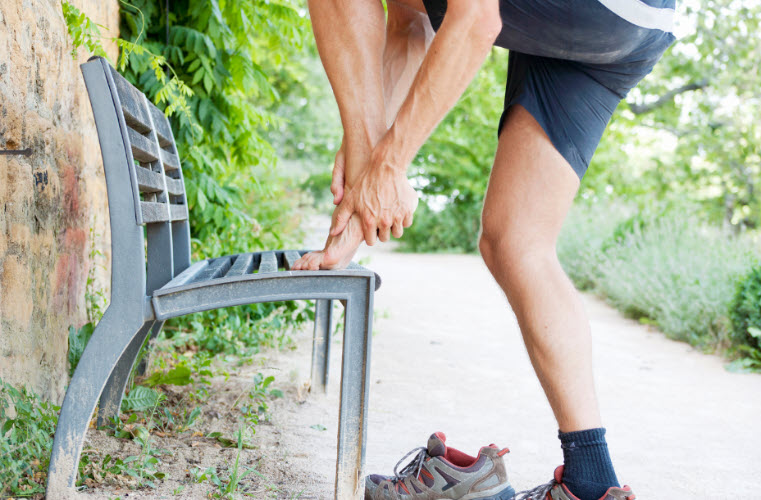
Plantar fasciitis
Plantar fasciitis is a very common cause of arch pain. This pain is also caused by abnormal or excessive pronation. Plantar fasciitis can occur in a high arched or low arched foot. Pronation or excessive pronation pulls the plantar fascia beyond its anatomical limits and causes microtears around the heel and the mid-arch. It can also affect the area under the ball of the foot.
A good stretching program and a proper custom orthotic, after a comprehensive biomechanical examination anti-inflammatories and anti-inflammatory oral medications, can help to stop the pain as well as help to correct the deformity.
Stress fractures
Stress fractures of the arch bone (navicular) are another cause of arch pain. A stress fracture is a more serious injury, and one which is often misdiagnosed, as it is typically only visible using an MRI. Because stress fractures are often mistaken for tendinitis, the healing time is then delayed. Stress fractures of the navicular bone must be immobilized by casting or a walking boot with crutches and take a considerable amount of time to heal. Surgery is sometimes necessary to fixate the fracture with an internal screw. The aftercare involves the use of a protective custom orthotic device, as well as a comprehensive rehabilitation program. Much care, guided by a professional, is required before returning to activity or play.
Arthritis
Another major cause of arch pain is “Arthritis”. Arthritis is classified in two different ways: osteoarthritis and rheumatoid arthritis. Osteoarthritis is the most common type of foot arthritis. This usually develops in people over the age of 50. Osteoarthritis has several causes that become painful conditions as we age. It could be caused by poor foot, mechanics, partial, deformity, or trauma. The pain comes from where, in sphere of the cartilage that cushions the ends of your bones and breaks down overtime.
Rheumatoid arthritis (a systemic variation of arthritis) is an inflammatory, connective tissue disease, which affects all joints in the body at different times, or simultaneously, and is a common cause of foot pain. Symptoms can include pain, swelling, stiffness, redness, and inflammation of the skin around the joints. There is pain in movement of the joints with or without normal activity. Medical intervention is necessary with monitored medication to control the disease process. Custom orthotic devices are helpful for mechanical deformities once the inflammatory process is controlled.
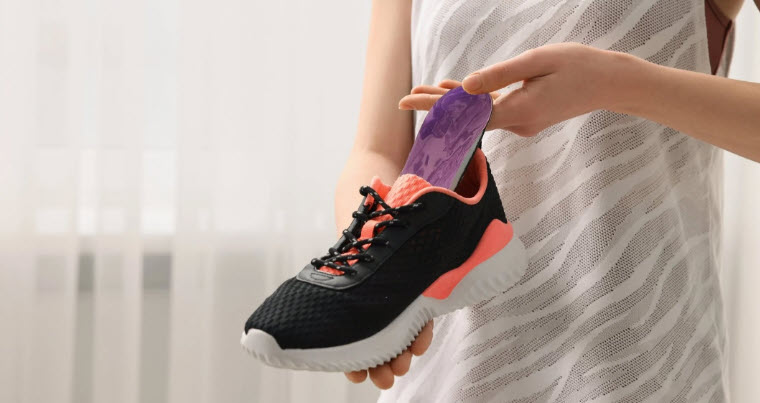 Custom orthotic insoles can help not only assist with performance enhancement, but more importantly can help to prevent, repair, and correct virtually all these issues making each step safer, more stable, and pain-free.
Contact Dr. Lee S. Cohen and Associates and let us help you with arch pain, heel pain, all types of foot pain, ankle pain, leg pain, hip pain, and lower back back pain. Our sports medicine podiatry team of doctors has been building stronger, more agile athletes and individuals, who outperform, for over 40 years.
Call us today (610)-522-9200 or use our contact form to schedule your appointment at our conveniently located offices in Marlton, N.J. or Ridley Park, PA.
 Q&A WITH

 Pickleball has increased in popularity, and because of that, injuries related to this sport are on the rise. Pickleball is played on a small court with paddles and a perforated plastic ball. It calls for a lot of stop-and-start motions and bursts of energy. This increases the risk of injuries like ankle sprains, falls, and Achilles tendon strains.